
Introduction
Closing a company in the UAE requires a structured legal process, not just stopping operations or allowing a trade licence to expire. Without formal liquidation, a business remains active in the eyes of UAE authorities, which can lead to ongoing tax obligations, labour file issues, and financial penalties for shareholders and directors.
A proper exit process ensures all regulatory responsibilities are cleared, including tax deregistration, employee settlements, and licence cancellation. In the UAE business environment, each authority has its own compliance requirements that must be completed in sequence.
Easy Access Management Consultancy provides structured advisory support to businesses navigating closure, helping ensure that every step is completed in line with UAE regulations and operational requirements.
Why Company Liquidation Matters in the UAE
An expired trade licence does not mean the company is closed. Authorities continue to recognise the entity as active until formal deregistration is completed.
Failure to liquidate properly may result in:
- Accumulating government penalties
- Active tax filing obligations with the Federal Tax Authority
- Labour file restrictions with MOHRE
- Potential banking and compliance issues
A formal liquidation ensures the business is fully removed from all regulatory systems, reducing long-term liability.
Steps to Liquidate a Company in the UAE
The liquidation process must follow a structured sequence. While requirements may differ slightly between Mainland and Free Zone jurisdictions, the core steps remain consistent.
1. Appoint a Licensed Liquidator
A shareholder resolution must be issued to dissolve the company and appoint a registered liquidator. The liquidator reviews financial records to confirm that all obligations are settled and no outstanding liabilities remain.
2. Cancel Employees and Visas
All employment contracts must be legally terminated. This includes:
- Settling end-of-service benefits
- Cancelling work permits and residency visas
- Closing labour and immigration files
A company cannot proceed to closure while it continues to sponsor employees.
3. Clear Office Lease and Utilities
The commercial lease must be formally terminated, followed by clearance from utility providers such as electricity, water, and telecom authorities. These clearances confirm that all accounts are fully settled.
4. Complete Tax Deregistration
Tax clearance is a critical step before liquidation approval. This involves:
- Filing final VAT or Corporate Tax returns
- Clearing any outstanding liabilities
- Applying for deregistration with the Federal Tax Authority
Incomplete or inaccurate financial records may delay approval until corrections are made.
5. Close Corporate Bank Accounts
Once regulatory clearances are underway, all corporate bank accounts must be closed. A final closure letter from the bank is typically required for submission to the licensing authority.
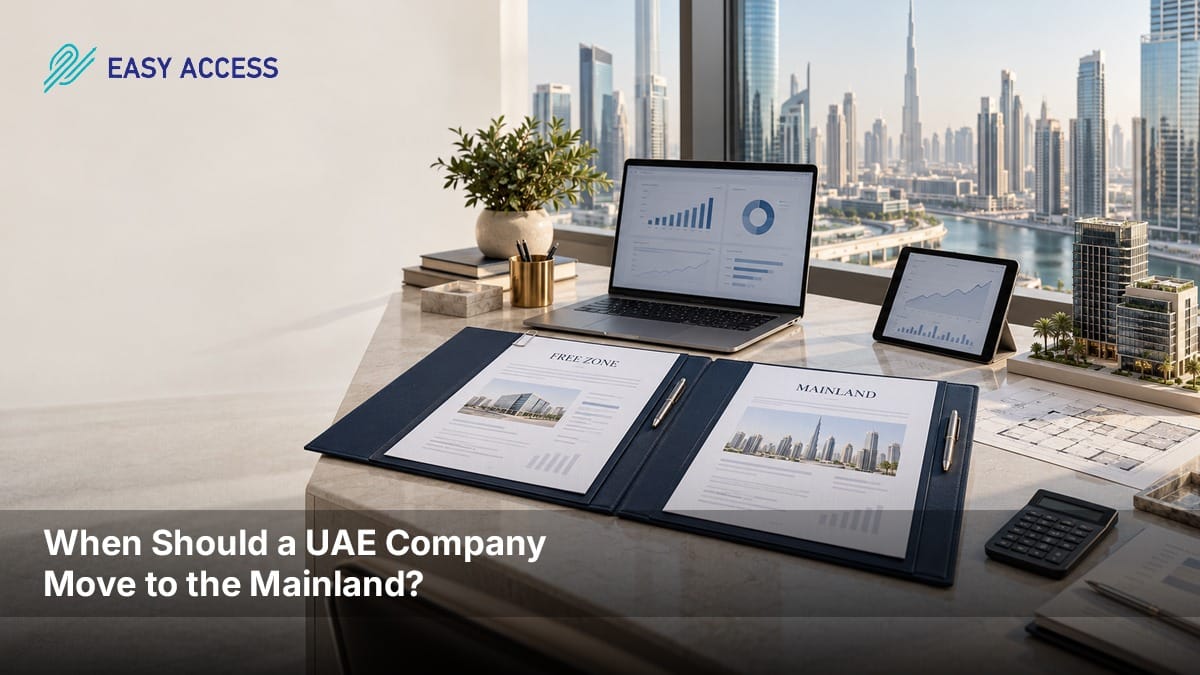
Mainland vs Free Zone Liquidation
Mainland Companies
Mainland businesses are required to publish a liquidation notice in a local Arabic newspaper. This allows a statutory period for creditors to raise any claims before final approval is granted.
Free Zone Companies
Free Zone liquidation is managed directly through the relevant authority. While the process is generally more streamlined, each Free Zone applies its own:
- Clearance procedures
- Audit requirements
- Administrative timelines and fees
Practical Considerations Before Exiting the Market
Before initiating liquidation, businesses should ensure:
- All financial statements are updated and accurate
- Outstanding invoices are settled
- Internal approvals are documented
- Compliance filings are complete
A structured approach helps avoid delays and ensures smoother clearance across authorities.
How Easy Access Management Consultancy Supports Liquidation
Easy Access Management Consultancy assists businesses through a structured, compliance-led approach to company closure in the UAE. The focus is on ensuring operational clarity at every stage of the exit process.
Support typically includes:
- Strategic advisory on liquidation planning
- Coordination with government authorities
- Assistance with documentation and clearance steps
- Guidance on tax and regulatory closure requirements
- Banking and post-setup support, where required
This ensures businesses can exit the UAE market in a controlled and compliant manner while minimising exposure to penalties or administrative delays.
Conclusion
UAE company liquidation is a regulated process that requires careful coordination across multiple authorities. Each step, from tax deregistration to visa cancellation, must be completed in full to ensure a legally compliant exit.
A structured liquidation protects business owners from ongoing liabilities and ensures a clean financial and regulatory closure. With professional guidance from Easy Access Management Consultancy, businesses can navigate this process with clarity and compliance.
FAQS
Is an expired UAE trade licence enough to close a company?
No. A trade licence expiry does not close a company. Formal liquidation is required to deregister the business.
How long does company liquidation take in the UAE?
Timelines vary depending on jurisdiction, approvals, and the company’s financial and compliance status.
Can a company be liquidated with unpaid debts?
No. All financial obligations must be settled or resolved before liquidation approval is granted.
Is tax deregistration mandatory before liquidation?
Yes. The Federal Tax Authority requires full tax clearance before approving company closure.
Do Free Zone companies follow the same process?
The process is similar, but each Free Zone has its own requirements, fees, and timelines.
Disclaimer
This article is for general informational purposes only and does not constitute legal, financial, or tax advice. UAE regulations may change, and requirements can vary depending on the jurisdiction and business structure. Businesses should seek professional advisory support before initiating liquidation or making compliance decisions.