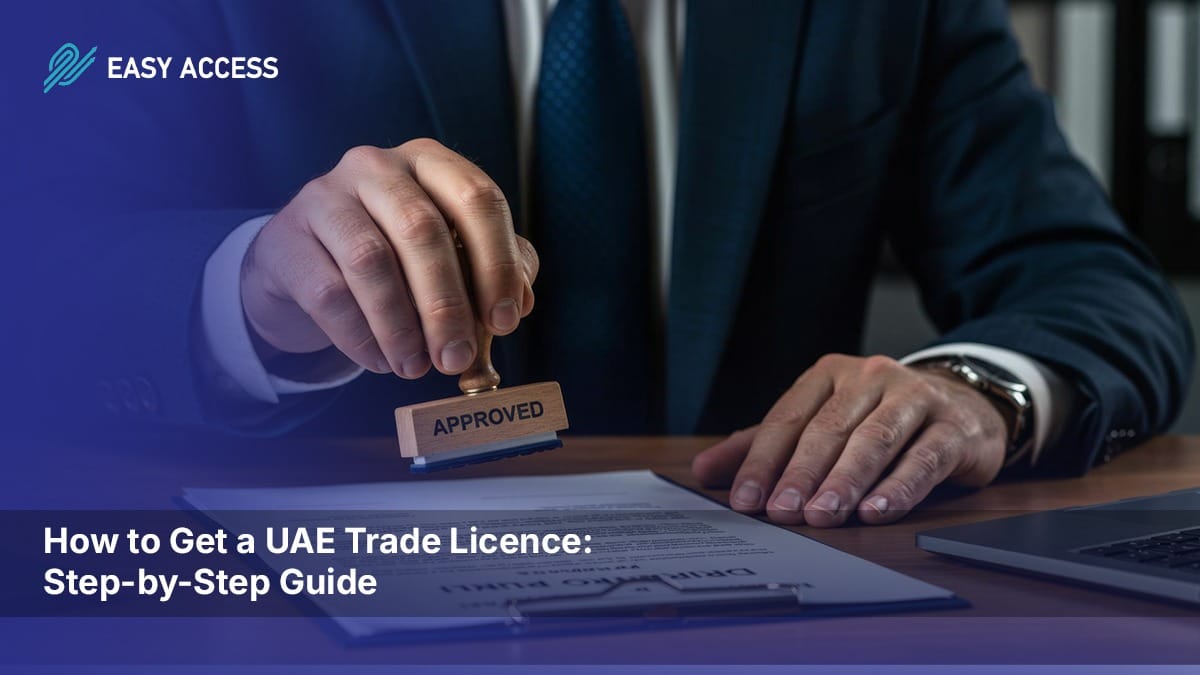
Starting a business in the UAE requires clear planning, the right approvals, and a valid trade licence. A UAE trade licence is the official document that allows a company to carry out approved business activities within its chosen jurisdiction.
For first-time entrepreneurs, the process can feel complex because the licence type, legal structure, location, and activity must all match. A wrong choice at the start can lead to delays, extra costs, or licence amendments later.
This guide explains how to get a UAE trade licence, what documents are usually required, how mainland and free zone options differ, and what to consider after your licence is issued.
What Is a UAE Trade Licence?
A UAE trade licence is a legal permit issued by a licensing authority. It confirms that your business is approved to operate under specific activities.
In the Dubai mainland, trade licences are issued through the Dubai Department of Economy and Tourism. In free zones, the relevant free zone authority issues the licence.
A trade licence is usually needed to:
- Open a corporate bank account
- Apply for investor or employee visas
- Lease office or commercial space
- Issue invoices and sign business contracts
- Register for relevant tax or compliance obligations
Operating without a valid licence can lead to fines, business restrictions, or licence-related complications. Entrepreneurs should complete the licensing process before starting commercial activity.
Main Types of UAE Trade Licences
The right licence depends on the nature of your business. Choosing the correct licence type helps keep your operations compliant from the start.
Commercial Licence
A commercial licence applies to businesses involved in buying, selling, importing, exporting, or trading goods.
It is commonly used for:
- Retail businesses
- Wholesale trading
- E-commerce trading
- General trading
- Import and export companies
Professional Licence
A professional licence applies to service-based businesses. These companies sell skills, advice, or expertise rather than physical goods.
It is commonly used for:
- Consultancy services
- Marketing agencies
- IT services
- Design services
- Training and education support services
Some professional activities may need additional approvals depending on the sector.
Industrial Licence
An industrial licence is required for businesses involved in manufacturing, production, processing, or assembly.
This type of licence may require:
- A physical facility
- Warehouse or factory space
- Municipality or civil defence approvals
- Sector-specific government approvals
Special Licence Routes
Some authorities may offer simplified licence routes for eligible activities, such as online businesses or low-risk commercial activities. These options vary by emirate, activity, nationality, and business model.
Applicants should confirm eligibility before applying.
Mainland vs Free Zone: Which Option Fits Your Business?
Choosing between the mainland and a free zone is one of the most important decisions in the UAE business setup process.
Mainland Licence
A mainland licence allows a business to operate within the UAE market, subject to the approved activity and authority rules.
A mainland setup may be suitable if you plan to:
- Serve clients across the UAE
- Work with government entities
- Open a physical shop or office
- Trade directly in the local market
- Build a long-term UAE-based operation
Mainland companies may need a registered office address. Requirements can vary based on the emirate, activity, and legal structure.
Free Zone Licence
A free zone licence is issued by a specific free zone authority. Free zones are often suitable for international trade, digital services, consultancy, and businesses that do not need direct access to the UAE mainland market.
A free zone setup may be suitable if you plan to:
- Serve overseas clients
- Run a remote or digital business
- Import and export through a free zone
- Use a flexi-desk or shared office options
- Maintain full foreign ownership where permitted
Free zone companies may face restrictions when trading directly on the mainland. In some cases, they may need a local distributor, branch, or additional approval.
Step-by-Step Process to Get a UAE Trade Licence
The process is structured, but requirements may vary depending on the jurisdiction and business activity.
Step 1: Define Your Business Activity
Every UAE trade licence is linked to one or more approved business activities. These activities describe what your company is legally allowed to do.
Before applying, list your services or products clearly. Then match them with the correct activity codes.
This step is important because:
- The activity affects your licence type
- Some activities need external approvals
- The wrong activity may limit your operations
- Adding activities later may involve extra fees
Clear activity selection helps avoid future amendments.
Step 2: Choose the Jurisdiction
Next, decide whether your business should be registered on the mainland or in a free zone.
Consider:
- Where your customers are based
- Whether you need to trade directly in the UAE market
- Whether you need office space
- How many visas do you require
- Whether your activity is regulated
- Your expected setup and renewal costs
This decision affects your licence, banking, visas, market access, and future growth.
Step 3: Select the Legal Structure
Your legal structure defines ownership, liability, and how the business is managed.
Common structures include:
- Limited Liability Company
- Sole Establishment
- Civil Company
- Free Zone Establishment
- Free Zone Company
The best structure depends on the number of shareholders, the activity, and the jurisdiction. Applicants should review liability and ownership requirements before choosing.
Step 4: Reserve the Trade Name
Your trade name must follow UAE naming rules. It should not be offensive, misleading, or too similar to an existing registered name.
In general, the name should:
- Reflect the business clearly
- Avoid restricted words
- Match the legal form where required
- Be available for registration
Trade name reservation is usually completed through the relevant licensing authority.
Step 5: Apply for Initial Approval
Initial approval means the authority has no objection to your proposed business setup. It does not mean the final licence has been issued.
At this stage, the authority reviews basic details such as:
- Shareholder information
- Business activity
- Legal structure
- Trade name
- Jurisdiction
Some activities need extra approvals from ministries, municipalities, regulators, or other government bodies.
Step 6: Arrange an Office or Business Address
Most businesses need a registered address before the licence can be issued.
For mainland companies, this may include an approved tenancy contract or registered office lease.
For free zone companies, options may include:
- Flexi-desk
- Shared office
- Private office
- Warehouse
- Industrial space
The right option depends on your activity, visa needs, and operating model.
Step 7: Prepare the Required Documents
Document requirements vary, but first-time applicants are usually asked to provide:
- Passport copies of shareholders
- Emirates ID copy, if applicable
- UAE residence visa copy, if applicable
- Passport-size photos
- Trade name reservation
- Initial approval
- Application form
- Memorandum of Association, where required
- Lease or office agreement, where required
Regulated activities may need additional documents, qualifications, certificates, or no-objection approvals.
Step 8: Submit the Application and Pay Fees
Once the documents are ready, the application is submitted to the relevant authority.
The authority reviews the file and may request changes or additional approvals. After approval, a payment voucher or invoice is issued.
Licence costs vary based on:
- Jurisdiction
- Business activity
- Legal structure
- Office type
- Number of shareholders
- Number of visas
- External approvals
Applicants should request a full cost breakdown before proceeding.
Step 9: Receive the Trade Licence
After payment and final approval, the authority issues the trade licence. The licence may be available digitally or through the authority’s service channel.
Once issued, check that the licence details are correct, including:
- Company name
- Licence number
- Business activity
- Legal form
- Issue and expiry dates
- Registered address
Any errors should be corrected early to avoid banking or visa delays.
What Happens After You Get a UAE Trade Licence?
Getting the licence is a key milestone, but it is not the final step. A new company may still need several post-setup actions.
These may include:
- Opening a corporate bank account
- Applying for investor or employee visas
- Registering with relevant tax authorities, where applicable
- Setting up payroll and Wages Protection System requirements, where applicable
- Preparing basic accounting records
- Renewing office or lease documents
- Tracking licence renewal dates
Post-setup support is important because many operational issues appear after the licence is issued.
Opening a Corporate Bank Account
A UAE trade licence is usually one of the main documents needed to open a corporate bank account.
Banks may also ask for:
- Shareholder documents
- Company formation documents
- Business plan or profile
- Source of funds details
- Expected transaction information
- Contracts or invoices, if available
Bank approval depends on the bank’s compliance checks. Requirements may vary based on the activity, ownership structure, nationality, and business model.
Entrepreneurs should prepare clear documents and avoid incomplete applications.
Renewing a UAE Trade Licence
Most UAE trade licences must be renewed regularly, often every year. The renewal process is usually simpler than the first application, but it should not be delayed.
Renewal may require:
- Valid lease or office agreement
- Updated company documents
- Payment of renewal fees
- Clearance of any authority requirements
- Updated external approvals, where applicable
Missing the renewal deadline can lead to penalties or business disruption. Companies should track licence, lease, visa, and compliance dates in one place.
Common Considerations for First-Time Entrepreneurs
Before applying for a UAE trade licence, review these practical points:
- Choose activities based on your real business model
- Check if your sector needs external approval
- Compare mainland and free zone access carefully
- Confirm office and visa requirements before payment
- Ask for a transparent cost breakdown
- Plan for renewal and post-setup compliance
- Keep copies of all approvals and licence documents
Operational clarity at this stage helps reduce delays and supports better business performance.
How Easy Access Management Consultancy Can Support
Easy Access Management Consultancy supports entrepreneurs with structured UAE business setup guidance. The process starts by understanding your activity, target market, ownership needs, and future operating plans.
Support may include:
- Strategic advisory on business structure
- Mainland and free zone guidance
- Transparent cost expectations
- Government relations and document handling
- Corporate banking support
- Post-setup compliance and operational support
- Dedicated account manager assistance
A clear process helps first-time entrepreneurs make informed decisions and avoid avoidable setup issues.
Conclusion
Getting a UAE trade licence is a structured process. The main steps are to choose the right activity, select the jurisdiction, confirm the legal structure, reserve the trade name, secure approvals, submit documents, and complete payment.
The best setup depends on how and where your business will operate. Mainland and free zone options each have different benefits, costs, and limits.
For first-time entrepreneurs, careful planning is essential. A well-matched licence supports banking, visas, compliance, and long-term business growth in the UAE.
FAQS
What is a UAE trade licence?
A UAE trade licence is an official permit that allows a business to carry out approved activities in the UAE. It is issued by a mainland economic department or a free zone authority.
Can foreigners get a UAE trade licence?
Yes. Foreign investors can apply for a UAE trade licence. Many mainland and free zone activities allow full foreign ownership, but requirements may vary by activity and jurisdiction.
Do I need a trade licence for an online business in the UAE?
Yes. Online businesses usually need a valid trade licence. The correct licence depends on the activity, platform, target market, and jurisdiction.
How much does a UAE trade licence cost?
The cost depends on the licence type, activity, jurisdiction, office space, visa quota, and approvals required. Applicants should request a detailed quote before starting the process.
Can I change my business activity later?
Yes. You can usually amend or add activities after the licence is issued. Extra fees or approvals may apply, depending on the activity and licensing authority.