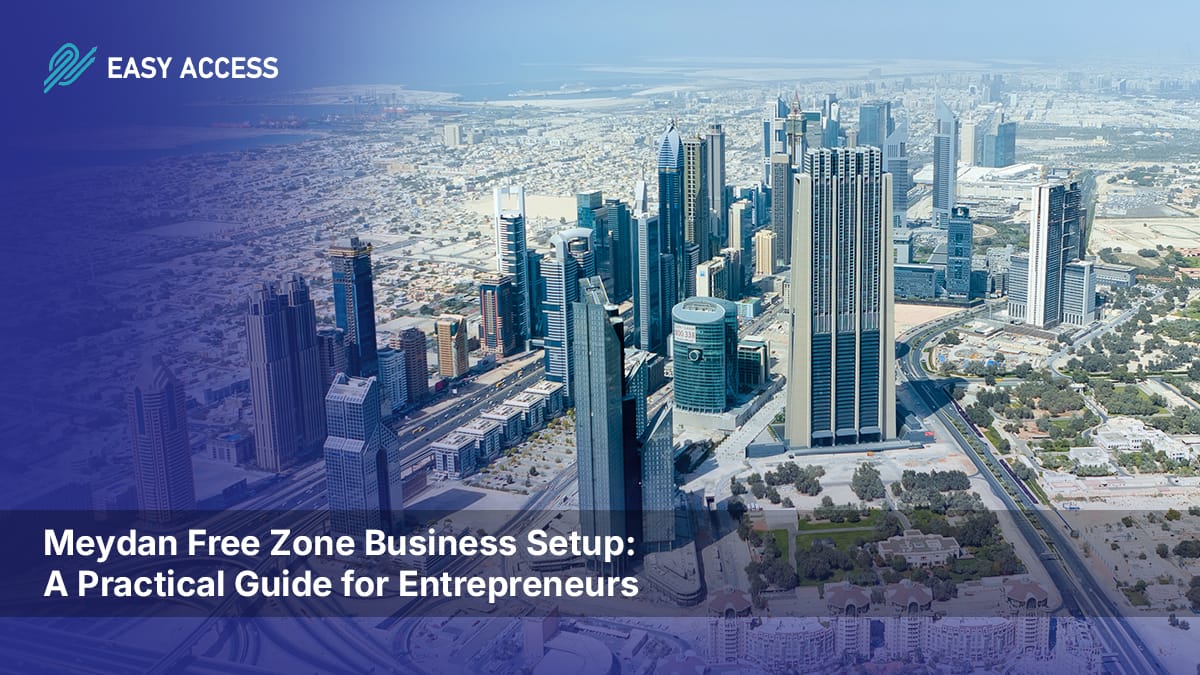
For entrepreneurs looking to establish a company in Dubai, Meydan Free Zone business setup can be a practical option. It offers a streamlined incorporation process, access to a broad range of business activities and flexible options for founders who want to build a UAE presence.
Meydan Free Zone can suit consultants, e-commerce businesses, technology companies, professional service providers and international entrepreneurs entering the UAE market.
However, choosing a free zone should never be based only on convenience. Business activity, visa requirements, banking, taxation and future expansion should all be considered before the company is registered.
This guide explains the key points founders should understand before setting up a company in Meydan Free Zone.
What Is Meydan Free Zone?
Meydan Free Zone is a Dubai-based free zone that allows entrepreneurs and companies to establish businesses across a wide range of approved activities.
Its digital-first company formation process makes it particularly convenient for founders who want a relatively straightforward setup experience.
Businesses can operate in areas such as:
- Business consultancy
- Management services
- Marketing
- Technology
- E-commerce
- Trading
- Professional services
- Digital and creative activities
The exact activities available depend on the licensing framework and any additional approvals required for regulated sectors.
For founders comparing different UAE jurisdictions, Meydan Free Zone can offer a useful balance between flexibility and access to Dubai’s wider business environment.
Why Businesses Consider Meydan Free Zone
There are several reasons why entrepreneurs explore a Meydan Free Zone company formation.
100% Foreign Ownership
Eligible businesses can be fully owned by foreign shareholders.
This allows international founders to establish and control their UAE company without introducing a local shareholder solely for ownership purposes.
Wide Range of Business Activities
Meydan Free Zone supports a broad selection of approved commercial and professional activities.
This can be useful for businesses offering more than one related service, provided the activities are properly included under the company’s licence.
Selecting activities accurately is important because they influence how the business is presented to banks, customers, authorities and other parties.
Digital Incorporation
A significant part of the company formation process can be completed digitally.
This makes the free zone accessible to both UAE residents and international entrepreneurs who may be planning their move or expansion from overseas.
Visa Options
Eligible companies may apply for investor and employee residence visas according to their selected company structure and visa allocation.
Founders planning to recruit employees or relocate family members should consider their visa requirements before completing the setup.
Dubai Business Presence
A Meydan Free Zone company gives entrepreneurs a Dubai-based corporate presence.
For many international founders, this can provide a useful platform for serving clients in the UAE, the wider Middle East and international markets.
How to Set Up a Company in Meydan Free Zone
The incorporation process is relatively straightforward, but each stage should be approached carefully.
Choose Your Business Activities
Start by clearly defining what the company will do.
The activities selected during incorporation should accurately reflect the services, products or commercial operations of the business.
Choosing unsuitable activities can create difficulties later, particularly when dealing with banks, customers or regulatory approvals.
Select the Appropriate Licence
The next step is choosing a licence that supports the intended business activities.
The right licence will depend on factors such as the nature of the business, number of shareholders, visa requirements and future operational plans.
Founders should think beyond the first year and consider whether the company structure will still work if the business expands.
Choose the Company Name
A proposed trade name must comply with the relevant UAE and free-zone naming rules.
Preparing more than one suitable name can make the approval process smoother if the preferred option is unavailable.
Prepare the Required Documents
For a standard individual-shareholder application, common requirements may include:
- Passport copy
- Shareholder details
- Proposed company names
- Selected business activities
- Application information
- Additional identification or compliance documents where required
Corporate shareholders may need to provide additional company documents, resolutions and ownership information.
Requirements can vary depending on the shareholder structure and business activity.
Submit the Application
Once the documents and business details are ready, the application can be submitted for review.
The authority may request additional information or clarification depending on the activity or ownership structure.
Receive the Business Licence
After approval, the company receives its incorporation and licensing documents.
Once the licence has been issued, founders can move on to post-incorporation steps such as visas, banking and relevant registrations.
Residence Visas
A Meydan Free Zone company may be eligible to apply for UAE residence visas.
Depending on the company structure, this may include:
- Investor or shareholder visas
- Employee visas
- Dependent sponsorship, subject to eligibility
The company licence and residence visa are separate processes.
Immigration documentation, medical fitness testing, Emirates ID registration and other procedures may also form part of the visa process.
Businesses planning to build a team should consider future visa needs before finalising their licence structure.
Opening a Corporate Bank Account
After company formation, many businesses will need a UAE corporate bank account.
It is important to understand that company registration does not automatically guarantee banking approval.
Banks carry out their own compliance and risk assessments.
They may review:
- Nature of the business
- Shareholder background
- Expected transaction activity
- Customer and supplier locations
- Source of funds
- Business contracts
- Countries the company works with
- Ownership structure
Clear business activities and properly organised company documentation can help make the banking process easier to navigate.
This is why banking should be considered during the company setup stage rather than after incorporation is complete.
Corporate Tax Considerations
Free-zone companies fall within the UAE Corporate Tax framework.
Being registered in a free zone does not automatically mean that all business income is subject to a 0% Corporate Tax rate.
A company may qualify for specific free-zone tax treatment if it meets the applicable conditions under UAE Corporate Tax regulations.
The treatment can depend on factors such as:
- Nature of the income
- Business activities
- Transactions with related parties
- Economic substance
- Compliance with applicable tax rules
Businesses should assess their tax position based on their actual operations rather than assuming that free-zone status alone determines their tax liability.
VAT Requirements
VAT obligations may also apply depending on the company’s taxable activities and turnover.
Businesses should monitor their transactions and assess whether VAT registration is required under UAE regulations.
Maintaining accurate accounting records from the beginning can make future tax compliance much easier.
Ongoing Compliance After Company Formation
A business setup does not end when the licence is issued.
Companies must continue to meet applicable administrative and regulatory requirements throughout their operations.
These may include:
- Licence renewal
- Corporate Tax registration and filing
- VAT compliance where applicable
- Accounting and bookkeeping
- Maintaining company records
- Beneficial ownership information
- Visa renewals
- Banking compliance updates
- Additional regulatory approvals where required
Good compliance practices help a business operate more smoothly and reduce the risk of delays when dealing with banks, authorities or future expansion.
Common Mistakes to Avoid
One common mistake is choosing a company structure without considering how the business will operate later.
Founders should avoid:
- Selecting incorrect business activities
- Ignoring future visa requirements
- Assuming corporate banking is automatic
- Treating free-zone status as an automatic tax exemption
- Overlooking bookkeeping and compliance
- Choosing a jurisdiction without comparing future expansion needs
- Assuming all UAE free zones follow the same rules
A little planning before incorporation can prevent unnecessary restructuring later.
Is Meydan Free Zone Right for Your Business?
Meydan Free Zone can work well for entrepreneurs looking for a Dubai-based company with a digital setup process and a broad range of approved activities.
However, it may not be the right choice for every business.
Before deciding, consider:
- Your exact business activities
- Target customers
- Number of shareholders
- Visa requirements
- Hiring plans
- Corporate banking needs
- Tax obligations
- Office requirements
- Future expansion plans
A consultancy may have very different requirements from an e-commerce company, trading business or organisation planning to hire a larger team.
The most suitable setup is the one that supports how the business actually intends to operate.
At Easy Access Management Consultancy, the focus is on understanding those operational requirements first. The aim is to help entrepreneurs structure their company, licensing, visas, banking and compliance around their wider business plans rather than treating company formation as an isolated administrative process.
Frequently Asked Questions
Can foreigners own 100% of a Meydan Free Zone company?
Yes. Eligible companies established in Meydan Free Zone can have full foreign ownership.
Can I apply for a UAE residence visa through a Meydan Free Zone company?
Eligible companies can apply for residence visas depending on their company structure, visa allocation and UAE immigration requirements.
Is Meydan Free Zone suitable for an online business?
It can be suitable for e-commerce, digital services, technology, consultancy and other approved online business activities. The correct activity should be selected during company formation.
Does a Meydan Free Zone company have to pay Corporate Tax?
Meydan Free Zone companies fall within the UAE Corporate Tax framework. Specific tax treatment depends on whether the business meets the conditions applicable to qualifying free-zone income and activities.