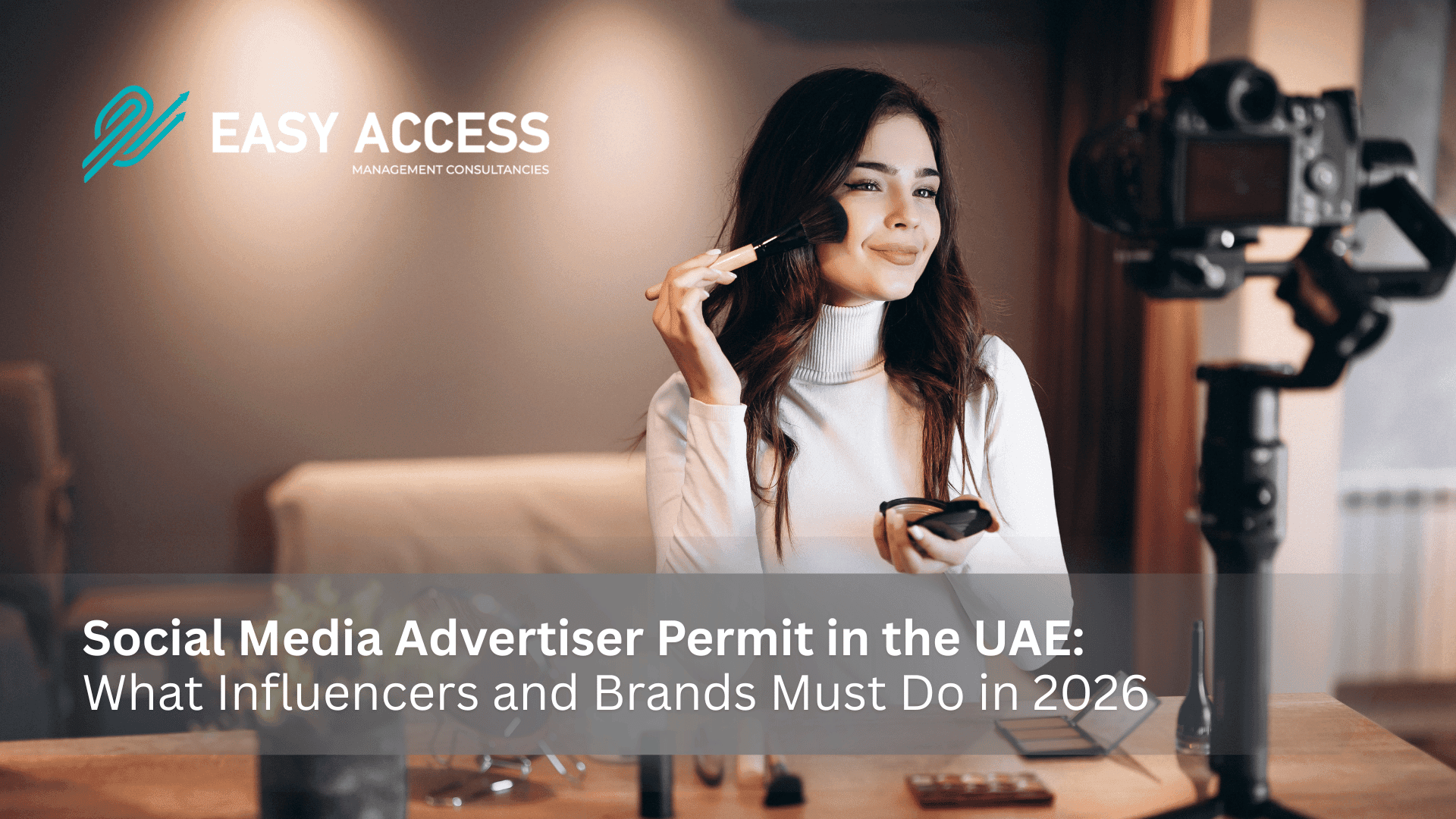
Influencer marketing in the UAE has officially entered a regulated era.
As of February 1, 2026, anyone publishing promotional or advertising content on social media, blogs, or digital platforms in the UAE must hold a valid UAE Advertiser Permit issued by the UAE Media Council.
This change reflects the scale and maturity of the creator economy across the Gulf. Influencer marketing is no longer informal. It is now treated as a regulated advertising activity, subject to the same compliance expectations as traditional media.
For creators, brands, agencies, and international talent, this shift introduces clear standards, formal accountability, and new operational requirements. Understanding how the Advertiser Permit works is now essential to staying compliant and avoiding financial penalties.
This guide explains what the Advertiser Permit is, who it applies to, what counts as advertising, and how businesses and creators can align with the new framework.
What Is the UAE Advertiser Permit?
The UAE Advertiser Permit is an official authorisation issued by the UAE Media Council under Federal Media Law No. 55 of 2023.
It allows individuals and entities to legally publish advertising or promotional content across:
- Social media platforms
- Blogs and websites
- Affiliate platforms
- Digital advertising channels
The law formally classifies influencer and creator promotions as advertising activity. This means sponsored posts, gifted collaborations, and affiliate promotions are now regulated in the same way as traditional advertising.
In practical terms, if content promotes a product, service, or brand as part of a commercial arrangement, it is considered advertising and requires a permit.
What Content Is Classified as Advertising?
The regulation is based on activity, not popularity. Follower count, reach, or platform size is irrelevant.
A permit is required for content that includes:
- Sponsored posts and paid brand collaborations
- Affiliate or referral link promotions
- Gifted or barter-based partnerships
- Paid endorsements or testimonials
- Promotional content on blogs or websites
- Any commercial promotion, whether paid or unpaid
If there is a commercial relationship or promotional intent, the content is treated as advertising.
Purely personal opinions or non-commercial content generally fall outside the scope — but once promotion is involved, compliance is required.
Who Must Hold an Advertiser Permit?
The requirement applies broadly across the digital advertising ecosystem, including:
- Influencers and content creators
- Bloggers and digital publishers
- Individuals promoting third-party brands or services
- Agencies managing influencer campaigns
- Businesses advertising through creators
It applies to:
- UAE citizens
- UAE residents
- Visiting or international influencers creating promotional content in the UAE
Brands and agencies are also expected to verify that the creators they work with hold a valid Advertiser Permit before launching campaigns.
This places compliance responsibility on both sides of the partnership.
Timeline: From Rollout to Enforcement
The Advertiser Permit framework was introduced with a structured rollout period to allow the market to adapt.
- Awareness and onboarding took place throughout 2025
- The final compliance deadline was February 1, 2026
- From this date onward, the permit is the standard requirement
As of now, promotional content published without a valid permit may trigger enforcement actions and financial penalties.
Why the Permit Matters for the Creator Economy
This regulation formally recognises influencer marketing as professional advertising activity.
For the market, this creates:
- Higher standards for sponsored content
- Stronger consumer protection
- Greater transparency in brand partnerships
- Clearer operating rules for creators and agencies
In practice, it supports:
- Clear sponsorship disclosures
- Responsible product promotion
- Verified advertisers
- Stronger trust between brands, creators, and audiences
For creators and brands, this reduces uncertainty and creates a more predictable, professional operating environment.
How to Apply for a UAE Advertiser Permit
For UAE Residents and Citizens
Applicants typically must:
- Apply through the UAE Media Council portal
- Be 18 years or older
- Have a clean media compliance record
- Hold a valid electronic media or relevant business licence
The permit is issued annually and is free for the first three years for UAE residents and citizens.
Many creators obtain their business licence through UAE free zones that support media, marketing, and content creation activities.
For Visiting or International Influencers
Visiting creators must apply for a Visiting Advertiser Permit through a UAE-based:
- Advertising agency
- Media agency
- Talent management agency
The agency must be accredited by the UAE Media Council.
Key points:
- Valid for up to three months
- Renewable once (up to six months total)
- Required for all promotional campaigns conducted in the UAE
This ensures international talent can work legally while maintaining regulatory oversight.
What Permit Holders Are Required to Do
Once issued, permit holders must comply with clear operational standards.
This includes:
- Following UAE advertising and media content rules
- Displaying the permit number clearly on social media profiles
- Publishing ads only through registered accounts
- Verifying that advertisers are legitimate
- Avoiding fraudulent, misleading, or unverified promotions
These obligations apply continuously, not just at the time of application.
Fines and Penalties for Non-Compliance
The Advertiser Permit is now fully enforceable.
Violations may result in the following penalties:
| Violation | Penalty |
| Operating without an Advertiser Permit | AED 10,000 (first offence), AED 40,000 (repeat) |
| Publishing false or misleading content | AED 5,000 – AED 10,000 |
| Severe violations affecting state interests | AED 50,000 – AED 500,000 |
| General content breaches | AED 5,000 – AED 1,000,000 |
| Expired permit | AED 150 per day (capped at AED 3,000) |
| Permit misuse | AED 20,000 |
These fines apply to individuals and entities, depending on the nature of the violation.
What This Means for Businesses and Brands
For businesses using influencer marketing, the Advertiser Permit changes campaign compliance.
Companies are now expected to:
- Verify creator permits before campaigns
- Structure contracts around compliant activity
- Ensure advertising standards are met
- Reduce regulatory risk in digital marketing
This creates stronger governance and protects brand reputation in the UAE market.
For investors and expanding businesses, this regulation is part of a broader shift toward structured, compliant digital operations.
Frequently Asked Questions
Is the UAE Advertiser Permit mandatory in 2026?
Yes. From February 1, 2026, anyone publishing advertising or promotional content in the UAE must hold a valid Advertiser Permit issued by the UAE Media Council.
What types of content require an Advertiser Permit?
Sponsored posts, affiliate links, gifted partnerships, paid endorsements, and any promotional content on social media, blogs, or websites require a permit.
Do visiting or international influencers need a permit?
Yes. Visiting influencers must obtain a Visiting Advertiser Permit through an accredited UAE-based agency.
Are personal accounts exempt?
Personal accounts promoting only their own products or services are generally exempt. Minors under 18 may also be exempt for education, culture, sport, or awareness content, subject to classification rules.
Key Takeaway for Creators and Businesses
The UAE Advertiser Permit marks a structural shift in how influencer marketing is regulated.
What was once informal is now governed by defined rules, clear responsibilities, and enforceable penalties.
For creators, agencies, and businesses operating in the UAE, alignment is no longer optional. Proper licensing, transparent advertising practices, and regulatory compliance are now part of professional digital operations.
For organisations expanding in the UAE, this reflects a broader trend: digital activity is being brought into the same compliance framework as traditional business and media.